Killing the Cancer of Toxic Behavior

– 7 min read

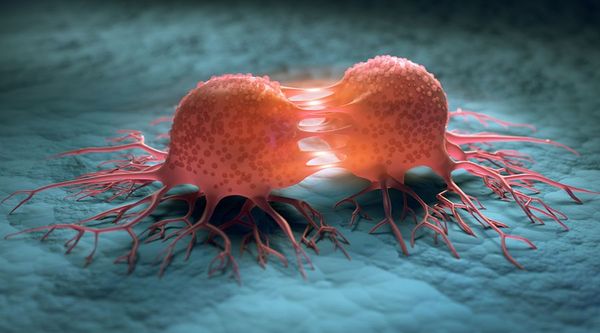
In 1997 I sat by my grandfather’s bedside holding his hand and watching him slowly die of pancreatic cancer. In 2001 I watched my wife battle cancer at the age of 32. In 2017 I watched my father whither away and die as stomach cancer ravaged his body. And in 2022, I sat by my mother’s bedside as an eleven-year battle with breast cancer ended her life after a metastatic reoccurrence in 2018.
You can’t coexist with cancer.
It will ravage you, and eventually kill you. You will be rendered helpless, and die, prematurely. And the death will be brutal. The only option, when cancer appears, is to remove it, or completely kill it.
I’ve thought a lot about this over the years, but as an analogy for what all of us deal with in our lives, at one time or another, usually multiple times, in the context of interactions and relationships with other people. And for the sake of this article, I’m thinking specifically of the realm of work and business.
I’m speaking metaphorically, referring to the disease that all of us encounter in life, in our places of employment, in our business interactions, carried and spread by toxic people. You don’t have to spend much time searching for the people who carry this disease and spread it to others.
Every business has its challenges and disruptions. The healthy ones among you view these challenges as opportunities to adapt, adjust, overcome, and become stronger and more successful tomorrow than yesterday.
The toxic ones among you see only the problems. It’s the end of the world for them, and the organization. They offer no solutions of their own, and only scoff at and ridicule the solutions offered by the healthy ones.
These are the people who make mistakes, miscalculations, errors in judgement, and repeatedly miss their own goals and targets and/or create costly problems for the organization.
And of course, none of this is their fault. They blame other people, systems they perceive as faulty, leadership, or a myriad other things that divert attention away from their own contribution to the failure. And we already talked about how they offer no solutions to the issues they perceive as the real cause of failure.
In every organization there are those who just naturally do well. They meet or exceed their goals. They are well liked, and frequently congratulated for their achievements. They lead and inspire others. They create and execute solutions and new initiatives for the greater good of the organization. Their work ethic is impeccable.
The toxic ones see this as a threat because health, and growth, and success, create a contrast that illuminates failures, mistakes, and bad behavior. To mitigate that contrast they do all they can to destroy the healthy ones, and since there is seldom anything negative to point to in the character and performance of the healthy ones, they often resort to misinformation, half-truths, and flat out lies.
Closely related to, and an extension of the last point, some toxic people will even resort to sabotaging the work of others, to manufacture failure for the sake of mitigating contrast between high performers and low performers, healthy people, and sick people.
Cancer begins with a single cell, but with alarming speed, infects every other nearby cell, destroying tissue, organs, and eventually the whole body. It is ravenous, insatiable in its destruction, and will not stop until killed or removed.
The same is true of the toxic people in our environments. They are bent on destroying, either consciously or subconsciously, everything they touch. And you’ll often notice a couple different ways that this plays out. Think of lions and spiders (I know, I’m mixing metaphors).
Some are migratory predators, who destroy individuals, teams, organizations, and then leave and move on to the next organization to wreak the same havoc. They seldom remain in the same place for long, always on the hunt for new prey.
Others seem to remain forever, particularly in organizations with weak and ineffective leadership. They spin a web, wait for others to become trapped, and then devour them. I’ve met many of these people in the corporate world. They’ve sat at the same desk for decades, surrounded by a toxic cloud, devouring all who dare come close.

For most of my life I attempted to simply coexist with the cancer of toxic people and their behavior. At times I had no choice, particularly when we were both employed by the same company, and even worked in the same departments. Sometimes the deadliest cancers were my own superiors, to whom I was forced to report and submit. After I left the corporate world and could choose who to have in my circle or not, I often tolerated toxic people with the naive hope that I could somehow remain uninfected and maybe even contribute to their cure. I still fall into this pattern at times.
Let me say it again. You can’t coexist with cancer.
First, you will feel the effects of your proximity to the disease. As you find yourself being dragged into it, you’ll begin to feel drained of your peace, your confidence, and your physical, mental, and emotional stamina. You’ll find yourself replaying arguments in your mind, and/or rehearsing for the next verbal battle. You’ll begin thinking about, and worrying about what others think and say about you when you aren’t around. You’ll wonder if lies are being told about you. You’ll begin hallucinating, imagining attacks against you that aren’t actually there. You won’t rest as well at night, resulting in physical fatigue, distraction, and the loss of focus and energy.
Eventually, if you remain in proximity to the cancer for long enough, suffering the effects I mentioned above, you yourself will become toxic, and you’ll begin doing to others what has been done to you. The cancer will have spread, to you, completely infecting you, and you in turn will begin infecting others around you.
If you are part of a team, and you allow yourself to become infected, you will destroy your team. If you are the owner, or leader of a business, you will destroy your business and the financial well-being of every stakeholder, shareholder, employee, and associate.

Cancer must be killed or removed. Now, since we’re speaking metaphorically, and killing toxic people is not an option, your only available treatment is removal. You will either remove the cancer from your realm, or remove yourself from the reach of the disease.
Neutralizing cancer in the body is a violent process that involves cutting and bleeding, and/or use of a deadly poison. It’s deliberate. It’s radical. It hurts. And it’s undergone with a zero-tolerance approach. Not a single cancerous cell can remain.
You cannot coexist with cancer. I’ve mentioned this, right?
The approach you take to neutralizing cancer depends upon the role you play in the environment that is being infected.
You have a duty to protect yourself, everyone on your team, and the life and health of your company. You must act quickly, decisively, with discernment, and even in a way that may appear unmerciful to the casual and minimally informed observer.
But, your actions must begin with discernment, carefully evaluating whether or not the individual is actually chronically toxic, or just having a bad day, week, or longer season of life. Is this a normally healthy person simply acting out of character? Chances are they aren’t metaphorically cancerous, but are just going through difficulties either on the job or in their personal life, and the correct approach is for you to show grace, kindness, and offer to help.
But if toxic behavior is all you’ve ever experienced with an individual, or the historically healthy person has become chronically toxic and refuses help, you have one option.
Remove that individual from your organization, being careful to follow the law and company policy.
Do it immediately.
Now.
And though as a healthy human being you will likely feel sadness for them, you must do so without remorse. Your action is saving the life of your organization and everyone in it.
You have some tough decisions to make, likely tougher than the leader has to make, because you have neither the authority or power to change the situation yourself, within the organization.
Your first approach may be to speak with your superior, human resources, or even the head of the organization about the situation, truthfully and professionally, and ask that they intervene.
If those you speak to refuse to take action and address the problem, your next approach should be to put every possible distance between yourself and the disease, refusing to engage and interact, if the work dynamics allow it. If this is impossible, another remedy may be to request reassignment to a healthier department within the organization, out of reach of the disease in your department.
If all else fails, you need to plan your exit. When leadership fails to deal appropriately with a disease within the organization, it will only get worse. The cancer will spread, and the company will eventually begin to fail. You do not want to be a casualty.
Get out.
Now.
Your mental, emotional, physical, spiritual, relational, and professional well-being is far more important than any organization, job, or paycheck. This will likely take some planning on your part, but act expeditiously and remove yourself as quickly as possible. You may choose to leverage your network and move to another, healthier organization. Or you may choose to liberate yourself entirely, and begin your own business, where you alone can control who gets to be a part of your life and work, and who doesn’t.