What is the Failure Rate for a Franchise in 2024?

– 8 min read


You might have encountered articles suggesting that franchising isn’t a secure investment, citing high failure rates.
However, much of this stems from a lack of accessible, accurate information on franchising statistics. We’re here to shed some light on these numbers and offer a clearer perspective.
Compared to other forms of business ownership, franchising has grown in appeal. This growth spurt, sometimes referred to as the “franchise boom,” has led to a dynamic industry landscape where franchisors, brokers, and franchisees constantly adapt to new trends and data.
These statistics and trends illustrate the positive outlook for franchising in 2024. With substantial growth in establishments, job creation, economic output, and profitability, along with opportunities in emerging sectors and regions, franchising continues to be a compelling option for aspiring business owners. The integration of new technologies and a focus on sustainability further enhance the appeal of franchising, making it a dynamic and resilient business model.

There are so many variables to consider when asking what is the failure rate for a franchise. From the level of experience of the buyer and support they’ll get to the type of brand, its reputation, and the conditions of the market – meaning, the stats will vary.
Studies in the market have estimated that failure rates for franchises can be as high as 50%, while others studies show lower rates around 20%. With a range like this, It’s important you research the potential risks of starting a franchise before deciding to invest.
Also, have you considered working with a franchise broker? Having a broker in your corner is one of the best ways to gain this industry knowledge and confidence in your decision. They can help break down the numbers and statistics while also walking you through the process of becoming a franchise owner – from start to finish. Brokers also have access to the Franchise Disclosure Document (FDD). The FDD is where you can actually see the success rate of a franchise. The numbers are there, if you know how to calculate it or have a broker to help you understand it. So while the mass of general franchise success is hard to calculate, the individual franchise success is not, and our brokers have access to those numbers.
Now, let’s look into the many variables that impact the potential success of a franchise owner.
The first factor that could impact the failure rate of a franchise is the level of experience of the owner. Are you a professional who can manage and lead? Are you prepared to follow a business model? And how do you feel about adopting someone else’s marketing strategies? These are just a few questions – and your answer doesn’t have to be ‘yes’ to mean success.
Owners who have previous business experience and are able to adapt to the brand’s franchise model may be more likely to succeed than say those who are new to the business world entirely. However, if you’re someone without that experience – there are ways for you to get your footing fairly quickly in the business. Franchisors typically provide training and support to help new owners get started and acclimated, but it’s still important for franchisees to have a solid foundation of knowledge and skills to build upon.
Here are a few characteristics that could make someone an ideal franchisee:
•Commitment to following established systems and procedure
• Willingness to work hard to grow the business
• Good communication & customer service skills
• Ability to adapt to changes in the market
• Openness to learning and implementing new ideas
The second factor that could impact the success rate of a franchise is the amount of support a franchisor gives to its owners. So, for franchisees, this means choosing the right brand that gives you the support and training you need and want to feel successful.
When it comes to the success of a franchise, the business sector of a brand can be a major factor. Some industries, like food and home care services tend to be more resilient through economic storms. Other industries though, like retail and travel, may be more sensitive to shifts in consumer behavior.
Back to brand reputation! As we said earlier, if the market is already familiar with a brand, new owners may have an influx of customers come launch-time. This is a factor of franchise success that can be thought about prior to making the decision to buy that specific brand.
Lastly, consider the market conditions when looking into franchising and how you can be more successful. Ask the right questions to determine how a brand might fare currently and in the future.

On the topic of market conditions, many potential buyers feel that during a recession is the worst time to invest their money in a franchise. However, that’s not necessarily the case. Franchising can actually be one of the most resilient and rewarding career decisions – despite a poor economy.
If you’re considering buying a franchise for your next investment, but are holding back due to fear of failure – what’s your alternative? People with entrepreneurial spirit like you usually want the freedom that comes with being your own boss. We understand that.
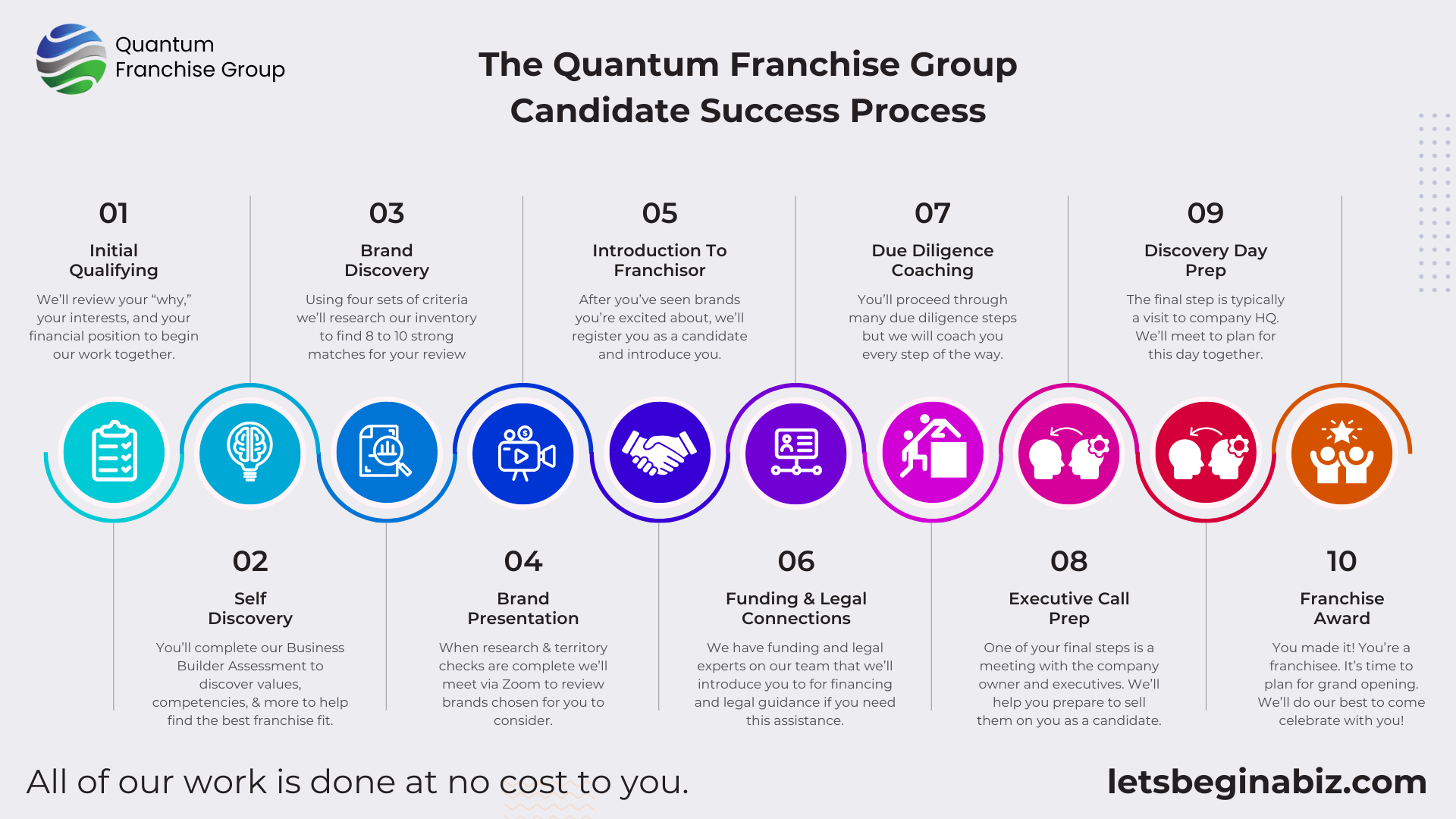
The truth is that the success statistics vary everywhere you look for answers. However, we want you to be informed and confident throughout your discovery process. Discovering, qualifying for, funding, and being awarded a franchise is often a lengthy and complex process.
Quantum Franchise Group is a team of franchise professionals who can position you as a high-priority candidate and will will guide you all the way through the due-diligence process while connecting you with the funding and legal representation you need to make the best decision for yourself.
Written by Kourtney Kopp
Quantum Franchise Group is a full service franchise brokerage representing over 800 brands across 37 industries. We are a member of the Franchise Brokers Association with certification in FTC compliance. Since March, 2022, Quantum President William Huffhine has helped aspiring business owners to open nearly 100 franchises across the United States.
We serve aspiring business owners, at no cost to them, by guiding them step-by-step through the entire 6-step franchise ownership process.
Our role is not to sell. We're in the relationship business. Our role is to guide our clients toward successful business ownership with great franchise opportunities. All of our brands are carefully evaluated and vetted so our clients can be assured that all of the work we do together will be in their best interest.