How Much Is My Business Worth? A Guide to Business Valuation
A rigorous valuation tells you what your business is realistically worth. It tells you what a buyer and a lender will actually support. And it tells you what, if anything, you can do before going to market to improve your position and your price.
One of the most common questions we receive from business owners who are beginning to think about an exit is also one of the most important ones they can ask.
"What is my business actually worth?"
According to James Daniel, Vice President of Resale Operations at Quantum Business Transitions, A rigorous valuation grounded in actual market data, comparable transactions, and normalized financials does three things. It tells you what your business is realistically worth. It tells you what a buyer and a lender will actually support. And it tells you what, if anything, you can do before going to market to improve your position and your price.
Most owners have a number in their head. Sometimes it is a round number they arrived at emotionally. Sometimes it is what they paid to open or acquire the business plus what they've invested since. Sometimes it is simply what they feel they deserve after years of hard work.
None of those approaches produces an accurate answer. And an inaccurate answer to this question costs business owners money, time, and in some cases, the sale itself.
Here is how a professional business valuation is actually conducted.
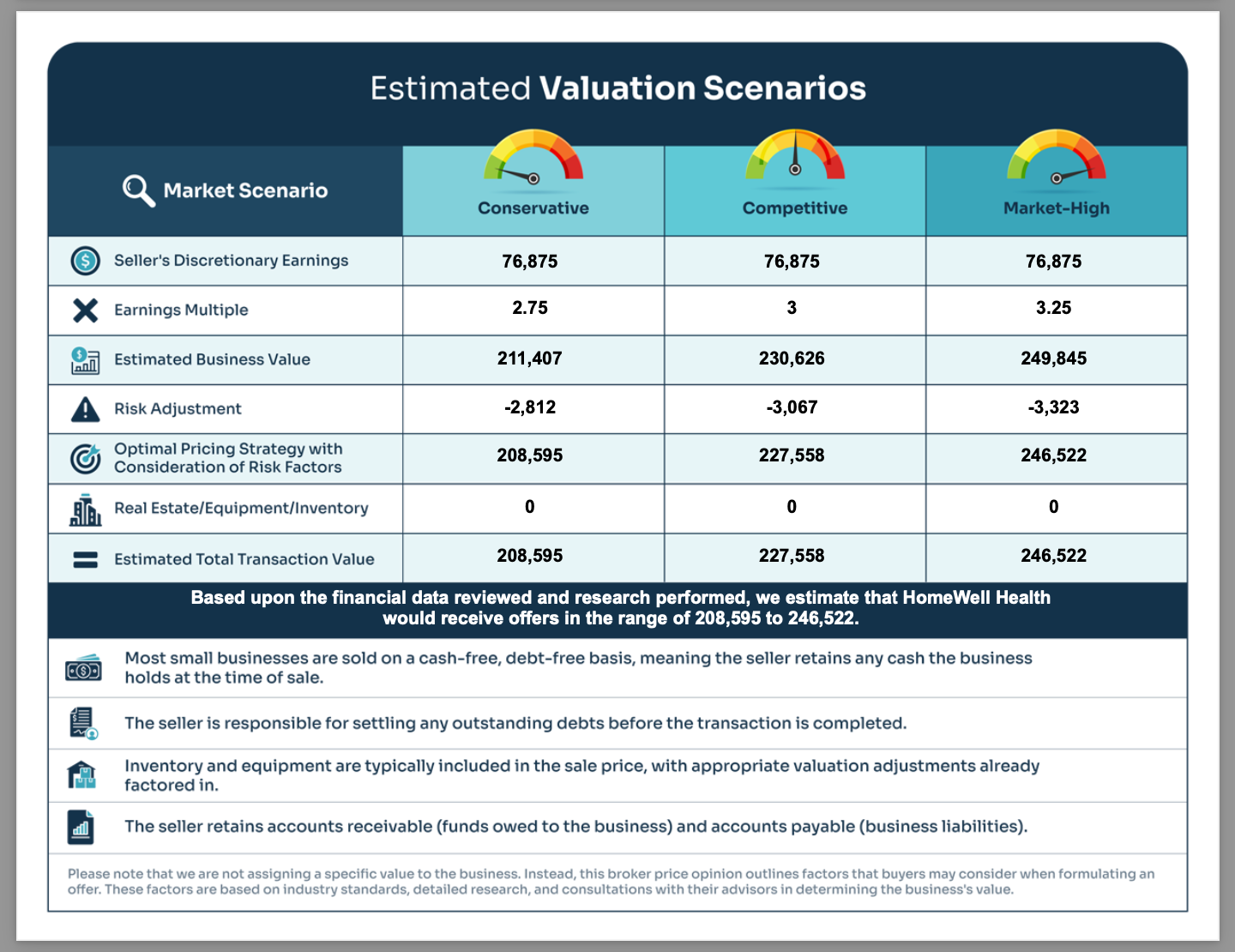
The foundation of any small business valuation is a figure called Seller's Discretionary Earnings, or SDE. This is the single most important number in the entire process, and it is almost never the same as what appears on your tax return or your profit and loss statement.
SDE represents the total economic benefit a working owner-operator receives from the business in a given year. It begins with net income, then adds back interest, taxes, depreciation, and amortization to arrive at EBITDA. From there, it adds back the owner's salary, personal benefits running through the business, and any non-recurring or non-essential expenses that would not transfer to a new owner.
The result is a clean, accurate picture of the actual cash flow a buyer would inherit on day one of ownership.
Why does this matter? Because buyers and lenders don't buy businesses based on tax returns optimized to minimize taxable income. They buy businesses based on what the business actually puts in an owner's pocket. Normalizing the financials to reflect that reality is the first essential step in establishing a credible asking price.
Step Two: Selecting and Applying an SDE Multiplier
Once SDE is established, a multiplier is applied to determine the business's fair market value. The multiplier reflects what buyers in the open market have historically been willing to pay for a dollar of earnings in your specific industry.
For most small businesses with revenues under $1 million, multipliers typically range from 1 to 4 times SDE. For businesses in the $1 to $5 million revenue range, multipliers generally fall between 2.5 and 4 times SDE depending on the industry, the stability of earnings, and market conditions.
A professional valuation draws the multiplier from three sources: comparable businesses that have recently sold, comparable businesses currently listed for sale, and industry rules of thumb established by authoritative pricing guides like the Business Reference Guide, which has been the standard resource for business brokers, M&A advisors, accountants, and lenders for more than 30 years.
For context, senior care and home health businesses, as one example, have historically transacted at median multipliers in the range of 2.86 to 2.99 times SDE based on precedent transactions, with comparable active listings showing similar ranges. The Business Reference Guide benchmark for this industry sits at 2.9 times SDE.
Step Three: Risk Weighting and Adjustment
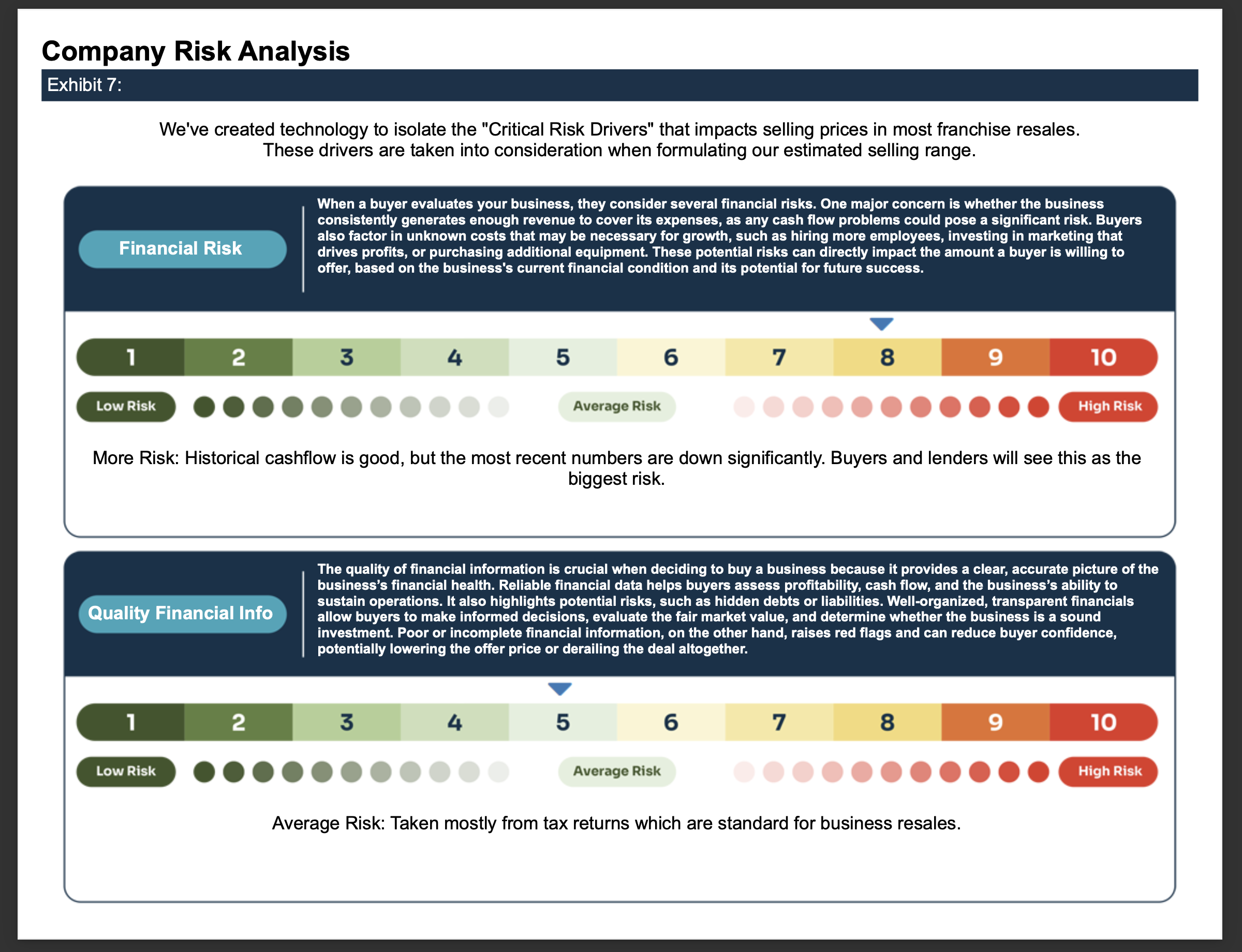
A raw SDE multiple is not the final answer. Every business carries its own risk profile, and buyers price that risk into their offers. A professional valuation explicitly analyzes the key risk drivers that will influence what a buyer is willing to pay and what a lender is willing to finance.
The critical risk categories assessed in a comprehensive valuation include:
Financial Risk: Is the business generating consistent, positive cash flow? Are recent results trending up or down? A business with strong historical performance but declining recent results will carry more financial risk in the eyes of buyers and lenders than one with a consistent upward trajectory.
Quality of Financial Information: Are the financials documented through tax returns, reviewed financial statements, or profit and loss statements? The more reliable and auditable the financial documentation, the more confidence a buyer and lender will have in the numbers, and the higher the offer they will be willing to make.
Management Risk: How dependent is the business on the current owner's relationships, knowledge, and daily presence? A business that runs well without the owner is worth more than one that falls apart the moment the owner steps away.
Brand Risk: In a franchise context, the strength and reputation of the franchisor's brand directly affects resale value. A strong brand with a healthy system and growing name recognition commands a premium. A struggling or declining brand does not.
Industry Risk: Is the underlying industry growing, stable, or contracting? Buyers factor the trajectory of the broader industry into their assessment of risk and long-term viability.
Each risk factor is assessed and scored, producing an overall risk adjustment that is applied to the estimated value derived from the SDE multiple.
Step Four: The Three Valuation Scenarios
A complete valuation does not produce a single number. It produces a range expressed across three scenarios: conservative, competitive, and market-high.
The conservative estimate applies a lower multiplier and assumes a buyer who negotiates firmly. The competitive estimate reflects the most likely transaction price in a well-positioned, professionally marketed sale. The market-high estimate reflects what a highly motivated buyer in favorable financing conditions might be willing to pay.
The spread between conservative and market-high is typically meaningful. How well you position the business for sale, how clean your financials are, how strong your transition plan is, and how professionally the business is represented in the marketplace all influence where in that range your actual transaction price lands.
Step Five: Financing Impact Analysis
One often-overlooked element of a professional valuation is the financing impact analysis. A business that cannot be financed is a business that can only be sold to an all-cash buyer, which dramatically limits the buyer pool and almost always reduces the price.
A proper valuation models what a financed acquisition looks like for a buyer, including the debt service coverage ratio, the annual loan payment relative to available cash flow, and the estimated payback period. Lenders generally require a debt service coverage ratio greater than 1.25 to approve an acquisition loan. A business that cannot clear that threshold at its asking price will either attract a lower offer or fail to close entirely.
What a Professional Valuation Does for You
If you own a business and have begun thinking about your exit, whether that is one year away or five, the valuation conversation is the right place to start.
Quantum Business Transitions provides professional business valuations grounded in the same methodology described in this article: normalized financials, market comparables, risk analysis, and scenario-based pricing guidance.
James Daniel is the VP of Resale Operations at Quantum Business Transitions. James will walk you through the process of establishing a fair asking price for your business and how he can assist with finding a new buyer.
Will Huffhine is a business ownership strategist and founder of Quantum Franchise Group. He works with professionals exploring franchise ownership, business acquisition and entrepreneurship and leads a national team of franchise consultants.