Why a Layoff Sparks Entrepreneurial Determination Followed by a Return to Employment
Something happens in the weeks after a layoff. There is a window, usually right after the shock wears off and before the bills start to feel loud, where something in a person shifts.
People who swore they were done with bosses often end up going back to look for one. Here's what that decision is really costing them.
Something happens in the weeks after a layoff. There is a window, usually right after the shock wears off and before the bills start to feel loud, where something in a person shifts. The anger is still fresh, the pride is still stinging, and for a brief moment the future looks genuinely open. People in that window say things like "I am never working for someone else again." They mean it. They start making lists. They research franchise models. They call their cousin who owns a restaurant and ask how he did it.
Then, slowly, the window closes.
By the time six or eight weeks have passed, a lot of those same people are polishing their resume and refreshing their LinkedIn. The lists are still in the notepad app on their phone. The research tabs are still open in their browser. But they are not looking at them anymore. They are looking at job boards.
This is not a failure of character. It is a predictable response to a specific kind of pressure, and understanding it honestly is the first step toward making a real decision rather than just a fear-driven one.
Why People Go Back
The psychology here is not complicated, but it is powerful. When a job disappears, two things happen simultaneously: income stops, and identity wobbles. For most people who have spent their career inside organizations, the job is not just a source of money. It is a source of structure, belonging, daily purpose, and social proof. The business cards, the title, the feeling of being part of something with a name that people recognize, all of that goes with the paycheck.
Entrepreneurship does not replace any of that immediately. It replaces it eventually, often with something richer, but the lag time between leaving one identity and building another is deeply uncomfortable. When people describe "realizing" that starting a business is not right for them, they are usually describing that discomfort rather than a real assessment of their readiness. The mind is very good at dressing fear up as clarity.
Add to that the external pressure. Spouses worry. Parents ask questions. Mortgage payments do not pause for self-discovery. The longer the gap in income, the more the job search starts to feel like the responsible, mature, realistic choice. Starting a business starts to feel like something you do when you can afford to take risks. The retreat gets reframed as wisdom.
💡
How To Evaluate a Return to Employment Honestly:
1. Make a list of all the reasons you never want to have a W2 job with a boss again.
2. Make a list of all the reasons why business ownership could be the best new future for you and your family.
3. When the new job offer arrives, honestly answer two questions: Does the new job honestly dismiss everything on both lists? Based on what I know about this company, will I be happier and more fulfilled in the new job than I would be as a business owner?
What You Are Actually Choosing
Here is what that framing gets wrong. Finding a new job is not the safe option. It is a different kind of risk with a different timeline.
A new job offers immediate income, immediate structure, and a familiar operating environment. Those are real benefits and they are worth naming clearly. But a job also means that your income has a ceiling set by someone else, your schedule is managed by someone else, and your continued employment depends on decisions made in rooms you are not invited into. You have just lived through exactly what that means. The company that laid you off did not lay you off because you were not performing. It laid you off because someone in a room you were not in made a decision that had nothing to do with the quality of your work.
Signing on with a new employer does not protect you from that. It resets the clock and moves you to the back of the line in a new organization. The handcuffs are the same. They are just a different color.
Starting a business, by contrast, means that your income is not capped by a salary band. It means that you are terminated only if you decide to quit. It means that when you perform well, the reward flows to you rather than to shareholders or a bonus pool managed by someone in HR. The tradeoff is that the early months are uncertain and the work is heavy and the accountability is total. Nobody is cutting you a check while you figure it out.
That is genuinely hard. It is also genuinely worth it for the right person.
The Honest Case for Going Back to Work
Not everyone should start a business, and an article that pretends otherwise is not honest with you.
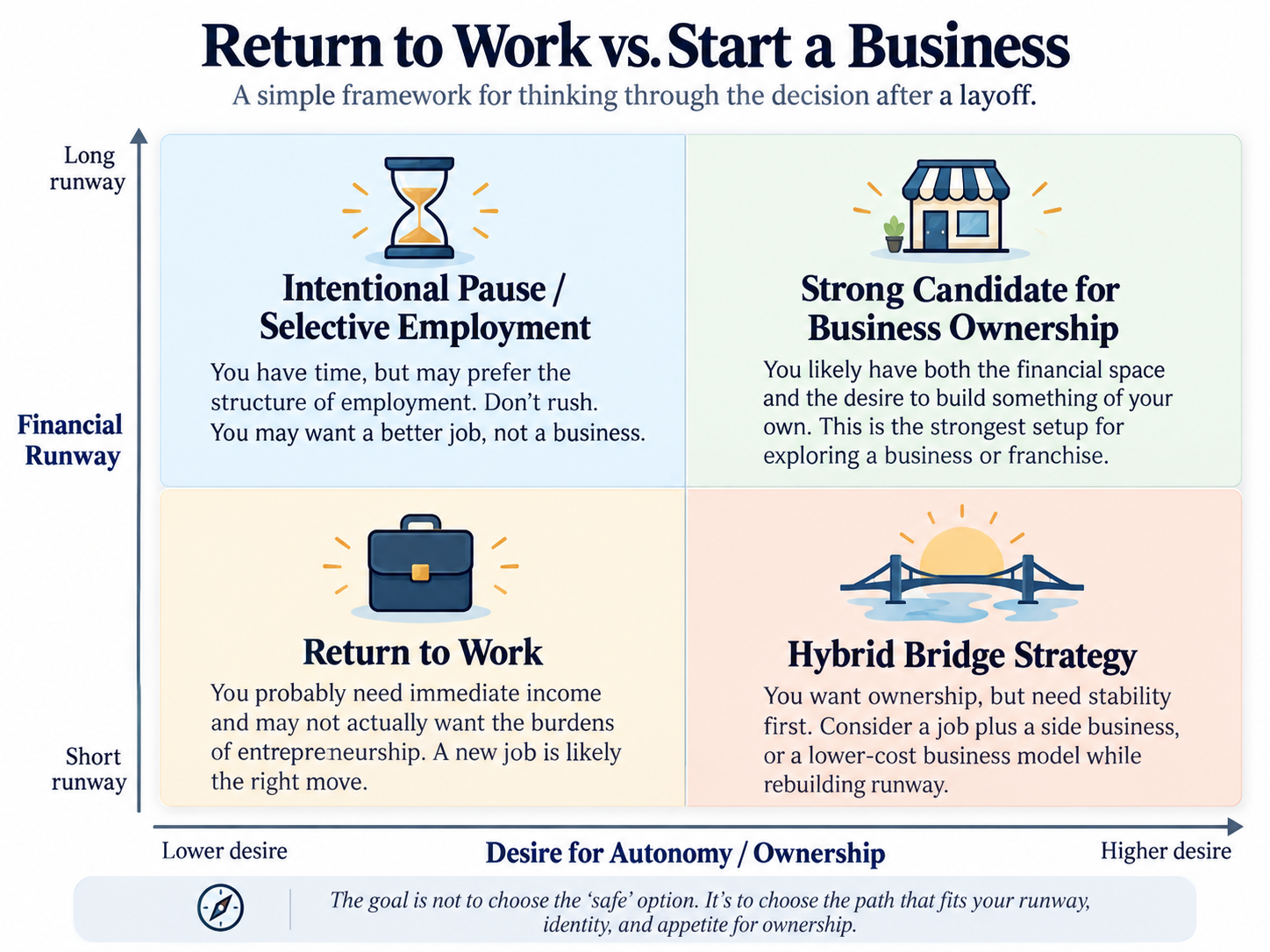
Going back to employment is the right call if your financial runway is genuinely short, and you do not have the capital reserves or the household support to weather six to eighteen months of building something before it produces meaningful income. Entrepreneurship without runway is not brave. It is a setup.
It is also the right call if you thrive on the social and collaborative dimensions of organizational life. Some people do their best work inside institutions, with teams, with clear lanes and defined roles. There is nothing wrong with that. Self-awareness about where you do your best work is one of the most valuable things a professional can have.
And it is the right call if you genuinely love the craft of your profession and the work you do inside a company, and what you really want is a better company, or better leadership, or a different culture. In that case, the problem was not employment. The problem was that particular employer.
The Honest Case for Starting Something
But if none of those descriptions fit you, stay in that window a little longer before you close it.
If what you really want is control over your time, your income, your direction, and the way your professional energy gets spent, a new employer will not give you that. A better title and a higher salary will dull the desire for a while, but the desire does not go away. People who were meant to build something usually know it. They just need a clear path to do it rather than a romanticized idea of what it looks like.
One of the most predictable patterns I see in franchise consulting is the person who took a new job after a layoff, gave it two or three years, got laid off again or just walked away, and came back to the conversation they should have had the first time. The cost of that detour is real: years of equity-building time spent earning someone else's profit margin, years of identity formation spent inside someone else's org chart.
The window that opens after a job loss is uncomfortable precisely because it is real.
It is showing you something about the shape of the life you actually want. The question is whether you will do something with it before the urgency fades and the familiar closes back in around you.
Some people should take the new job. And some people should stop looking for one.
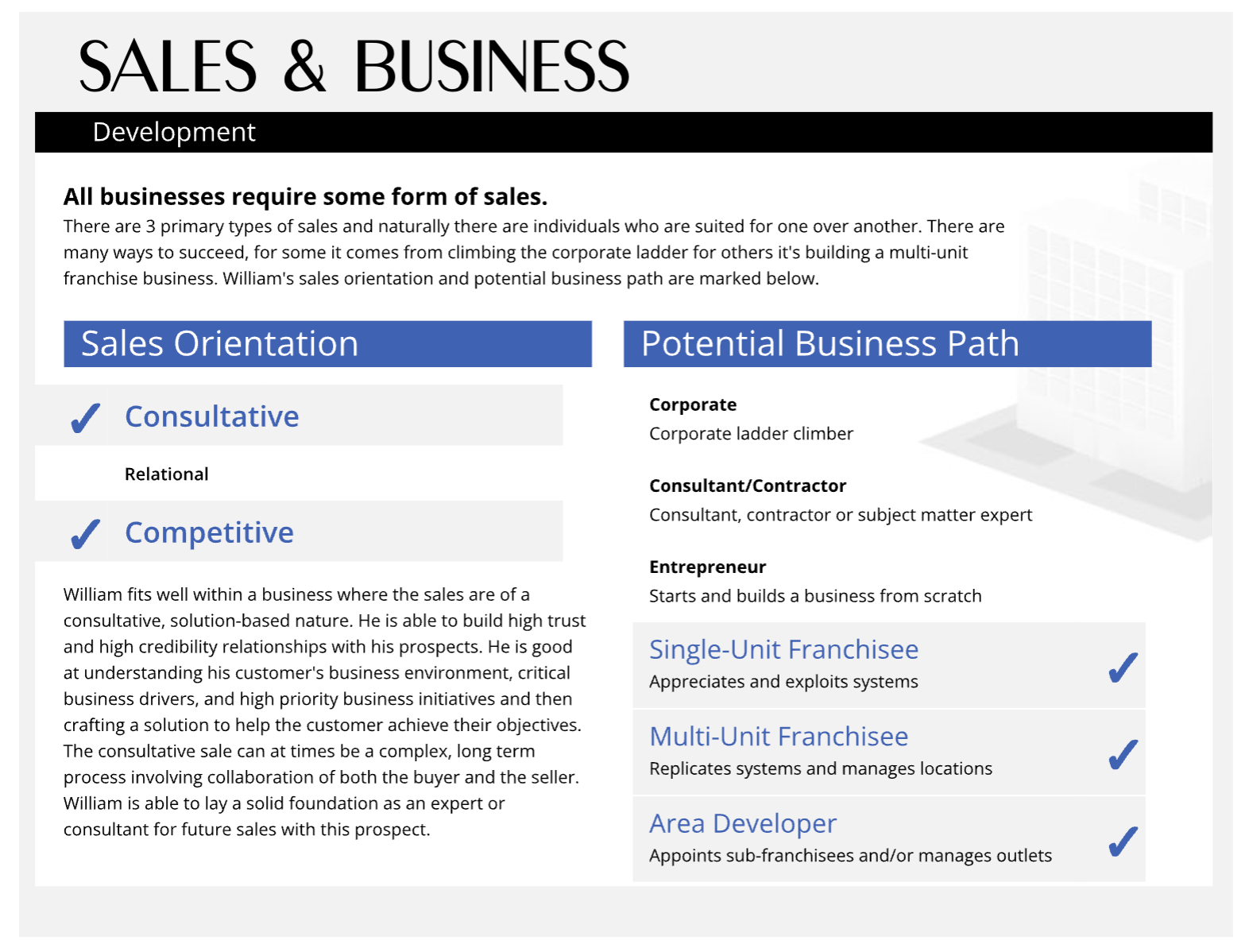
Did you know there's a free assessment you can take to help you determine if you're best suited for corporate employment, freelancing, starting an independent business on your own, or becoming a franchise owner? It takes 15 minutes and is remarkably accurate. If you're at a crossroads in your career and aren't sure where to stay the course, with another job or as a business owner, this free assessment is a great next step to help you decide.
Will Huffhine is a business ownership strategist and founder of Quantum Franchise Group. He works with professionals exploring franchise ownership, business acquisition and entrepreneurship and leads a national team of franchise consultants.